

The following tools and resources are designed to support communication with communities throughout Bangladesh regarding cyclone Amphan. Tools reflect changes to the standard procedures for evacuation, which have been introduced given additional risks related to Covid-19.
The tools below are NOT suitable for use with the Rohingya community in Cox’s Bazar. Different advice applies in that area and tools specifically designed for use with the Rohingya community can be found on a different page.
1: Guidance documents for use outside Rohingya camps (for practitioners – NOT for general dissemination to the public):
- Early warning messages to guide communication with communities (national scope)
- Cyclone messages for different signals for host communities in Cox’s Bazar (not for use inside the Rohingya camps)
- Guidance for volunteers in the host community
2: Audio tools for use through micing or via radio, outside Rohingya camps (for use directly with communities, reflecting the guidance above):
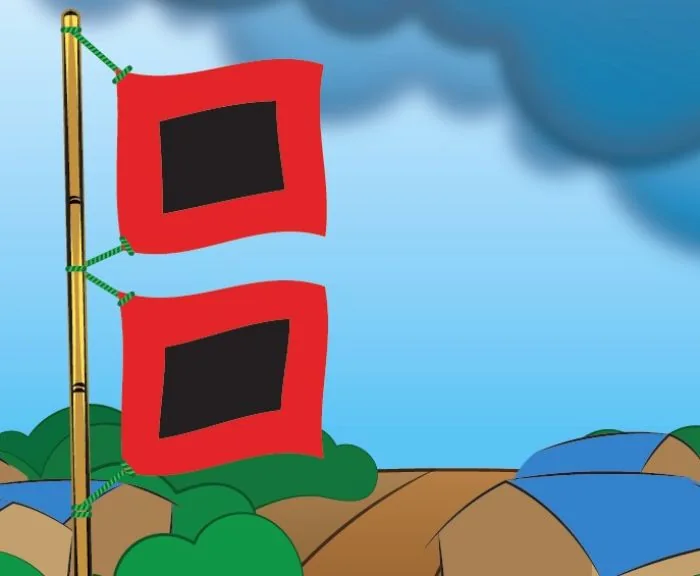
- Audio community information for dissemination ONLY during signal 5-7 (when 2 flags are raised) – standard Bangla version / Chittagonian version (BBC Media Action)
- Audio community information for dissemination ONLY during signal 8-10 (when 3 flags are raised) – standard Bangla version / Chittagonian version (BBC Media Action)
- Video explaining how to evacuate safely to shelters – ONLY for use in areas where evacuation / great danger signal 8-10 is in force (i.e. where 3 flags are raised) (BBC Media Action)
- Radio PSA for general awareness – standard Bangla (Bangladesh Betar)
- Radio PSA for general awareness – Chittagonian (Radio Naf)
3: Tools that may be useful after the cyclone has passed:
- [Updated 21 May] Specific Covid-friendly post-cyclone audio messages – a selection of short messages suitable for micing or use on mobile phones. (BBC Media Action)
- More generic post-flood audio messages – a selection of short messages suitable for micing or use on mobile phones. The messages cover advice about water purification, drowning, hygiene, water-borne diseases, snakebites, care of cattle and treatment of rainwater. There are also some specific messages around care of pregnant women and other vulnerable groups. (BBC Media Action)
- Video messages – three short videos covering advice on personal hygiene, water purification and water-borne diseases. (BBC Media Action)
- Infographics – 29 different infographics on a variety of topics that may be useful for flood-affected communities. The infographics could be printed as hand-outs, used as posters or distributed through social media. (BBC Media Action)
Some of these communication tools were originally produced under the Disasters and Emergencies Preparedness Programme, which was funded by the UK Department for International Development.